The muted microphone mishap. The barking dog in the background. The person who talks for ten straight minutes without noticing everyone else has mentally checked out.
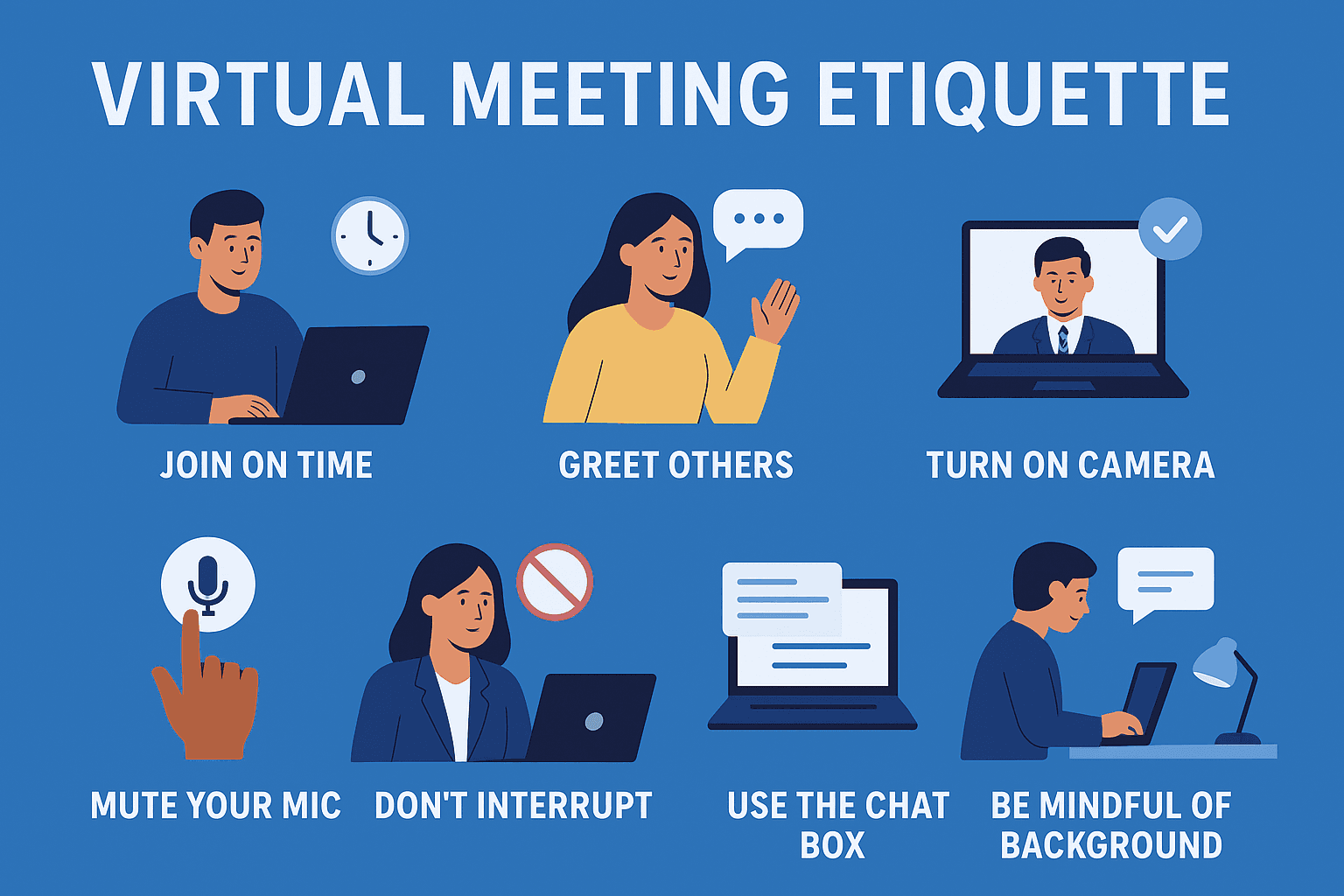
Virtual meetings are now part of everyday business life. Whether you’re working remotely, attending a Zoom call, leading a team sync, or pitching to clients online, how you show up on screen matters. And that’s where Virtual Meeting Etiette becomes your secret weapon.
In today’s digital workplace, your online presence speaks before you do. Your camera setup, body language, tone of voice, and even your chat behavior shape how colleagues and clients perceive you. Mastering Virtual Meeting Etiette isn’t just about being polite. It’s about standing out professionally in a world dominated by video conferencing platforms.
Let’s break down 12 expert rules that will help you shine in every virtual meeting.
Why Virtual Meeting Etiette Matters More Than Ever
Remote work has transformed business communication. Platforms like Zoom, Microsoft Teams, and Google Meet are now essential tools for collaboration, productivity, and client engagement. However, digital communication removes many nonverbal cues we rely on in face-to-face meetings.
Because of this, Virtual Meeting Etiette becomes even more critical.
Good etiquette:
-
Builds professional credibility
-
Enhances team collaboration
-
Reduces misunderstandings
-
Improves engagement
-
Boosts leadership presence
-
Strengthens workplace relationships
When done right, Virtual Meeting Etiette helps you project confidence, respect, and authority—even through a screen.
Now, let’s dive into the 12 expert rules.
1. Be Early, Not “Right on Time”
Logging in exactly at the meeting start time is technically punctual. But in virtual settings, technical issues happen. Audio glitches, Wi-Fi drops, software updates—anything can delay you.
Instead:
-
Join 5–10 minutes early
-
Test your microphone and camera
-
Check screen sharing settings
-
Review the meeting agenda
This simple habit shows reliability and respect for others’ time. In professional video calls, punctuality reflects accountability and strong time management skills.
Virtual Meeting Etiette always starts before the meeting officially begins.
2. Dress the Part—Even at Home
Yes, you’re at home. But no, your hoodie may not send the right message during a client presentation.
Your virtual attire should match the meeting’s purpose:
-
Team stand-up: Smart casual
-
Client pitch: Business professional
-
Executive meeting: Formal business wear
Solid colors work best on camera. Avoid busy patterns that distract. Dressing professionally improves not only how others see you—but how you feel. Confidence shows up in posture, tone, and facial expressions.
Strong Virtual Meeting Etiette includes visual professionalism.
3. Create a Clean, Distraction-Free Background
Your background says a lot about you.
A messy room can subtly signal disorganization. On the other hand, a tidy workspace builds trust and credibility.
Best practices:
-
Choose neutral backgrounds
-
Remove clutter
-
Avoid bright windows behind you
-
Use virtual backgrounds sparingly
If you use a virtual background, keep it simple and professional. Fancy beach scenes may work for team bonding—but not for quarterly financial reviews.
Virtual Meeting Etiette is about minimizing distractions so the focus stays on the conversation.
4. Master Your Audio and Mute Strategy
Nothing disrupts a meeting faster than background noise.
Typing sounds, notifications, side conversations—these break concentration and frustrate participants.
Follow this rule:
-
Stay muted when not speaking
-
Use a quality headset or microphone
-
Silence phone notifications
-
Close unnecessary apps
Clear audio improves communication clarity and meeting efficiency. It’s a core principle of Virtual Meeting Etiette.
5. Maintain Virtual Eye Contact
Eye contact builds trust. But in video conferencing, it’s tricky.
If you constantly look at yourself on screen, you appear distracted. Instead:
-
Look directly at the camera when speaking
-
Keep your screen at eye level
-
Avoid multitasking
This small adjustment dramatically improves executive presence and public speaking impact during online meetings.
Virtual Meeting Etiette includes mastering subtle on-screen body language.
6. Avoid Multitasking at All Costs
We’ve all been tempted to check emails during long meetings. However, multitasking shows up in subtle ways:
-
Delayed responses
-
Distracted facial expressions
-
Typing noises
-
Missed questions
Active listening matters. Engagement signals respect and professionalism.
Here’s a quick comparison:
| Poor Virtual Behavior | Strong Virtual Meeting Etiette |
|---|---|
| Checking emails | Taking notes |
| Looking at phone | Maintaining eye contact |
| Interrupting | Using “raise hand” feature |
| Zoning out | Asking thoughtful questions |
When you’re fully present, people notice.
7. Follow the Meeting Agenda
Meetings without structure waste time. If you’re hosting:
-
Share the agenda in advance
-
Define clear objectives
-
Set time limits per topic
-
Summarize action items
If you’re attending, review the agenda beforehand. Preparation shows professionalism and improves collaboration.
Virtual Meeting Etiette isn’t just about manners—it’s about efficiency.
8. Speak Clearly and Concisely
In virtual communication, long-winded explanations lose attention fast.
Instead:
-
Use short sentences
-
Pause between points
-
Avoid talking over others
-
Be mindful of tone
Because there can be slight audio delays, speaking slowly improves clarity. Professional communication skills shine when your message is structured and intentional.
Remember, digital meetings demand sharper clarity than in-person discussions.
9. Respect Turn-Taking
Interruptions feel more chaotic online than in person.
Use platform features wisely:
-
“Raise hand” button
-
Chat function
-
Reaction icons
-
Moderator cues
Good Virtual Meeting Etiette means allowing everyone space to contribute. This encourages team engagement and inclusive communication.
In addition, acknowledging others’ ideas builds rapport and strengthens workplace culture.
10. Use the Chat Professionally
Chat boxes can enhance collaboration—but also derail focus.
Do:
-
Share relevant links or documents
-
Clarify quick points
-
Ask concise questions
Don’t:
-
Start side conversations
-
Use informal slang in formal meetings
-
Flood the chat
Professional chat behavior is a small but powerful part of Virtual Meeting Etiette.
11. Mind Your Body Language
Even on camera, body language matters.
Be aware of:
-
Facial expressions
-
Nodding to show agreement
-
Sitting upright
-
Avoiding excessive movement
Slouching signals boredom. Crossing arms may look defensive. Positive nonverbal communication strengthens leadership presence and builds trust.
Virtual Meeting Etiette includes physical awareness—even through a webcam.
12. End Meetings Strong
The way you close a meeting leaves a lasting impression.
Best practice:
-
Recap key decisions
-
Confirm deadlines
-
Assign responsibilities
-
Thank participants
If you’re not hosting, send a brief follow-up message summarizing action items. This demonstrates accountability and reinforces professional communication.
Strong Virtual Meeting Etiette doesn’t fade at the end—it finishes confidently.
Common Virtual Meeting Mistakes to Avoid
Even experienced professionals slip up. Here are common pitfalls:
-
Joining late without explanation
-
Talking over others
-
Forgetting to mute
-
Ignoring the camera
-
Eating loudly on screen
-
Using unprofessional usernames
-
Poor internet connection planning
-
Lack of preparation
Avoiding these improves your digital reputation instantly.
Advanced Virtual Meeting Etiette for Leaders
If you’re a team leader, manager, or executive, expectations are even higher.
As a Leader, You Should:
-
Set clear meeting norms
-
Encourage participation
-
Manage dominant speakers
-
Keep discussions focused
-
Monitor team engagement
-
Model respectful communication
Leadership visibility in virtual meetings directly impacts team morale and productivity.
When leaders demonstrate strong Virtual Meeting Etiette, team members naturally follow.
The Psychology Behind Virtual Presence
Here’s something interesting: People judge professionalism within seconds of seeing you on screen.
Factors influencing perception:
-
Lighting
-
Camera angle
-
Voice tone
-
Background setting
-
Facial expressions
-
Response timing
This is why Virtual Meeting Etiette influences career growth, promotions, and networking opportunities more than many realize.
Your digital presence is your modern first impression.
How Virtual Meeting Etiette Impacts Career Growth
Strong virtual communication skills can:
-
Improve client retention
-
Increase leadership opportunities
-
Strengthen personal branding
-
Boost credibility
-
Enhance networking results
-
Support career advancement
In hybrid workplaces, employees who master Virtual Meeting Etiette often stand out as reliable, polished, and leadership-ready.
It’s no longer optional. It’s a core professional skill.
Quick Checklist for Perfect Virtual Meeting Etiette
Before your next meeting, run through this checklist:
-
Camera at eye level
-
Neutral background
-
Good lighting
-
Microphone tested
-
Agenda reviewed
-
Notes ready
-
Professional attire
-
Phone silenced
-
Notifications off
-
Water nearby
Simple preparation creates powerful results.
Final Thoughts: Your Screen Is Your Stage
Virtual meetings aren’t going away. In fact, they’re becoming more central to global business communication.
Mastering Virtual Meeting Etiette means understanding that every online interaction shapes your professional image. From punctuality and posture to tone and turn-taking, small behaviors create big impressions.
If you want to shine in your next video conference, start applying these 12 expert rules today. Be intentional. Be present. Be professional.
About the Author