How to Convert Miles to KM Quickly and Accurately
Have you ever looked at a road sign, fitness tracker, or travel itinerary and wondered, “Wait… how far is that in kilometers?” You’re not alone. Whether you’re planning a trip abroad, training for a marathon, studying math, or just satisfying your curiosity, knowing how to convert miles to KM quickly and accurately is one of those small life skills that pays off again and again.
The good news? It’s far easier than most people think.
In this complete guide, I’ll walk you through how to convert miles to KM quickly and accurately using simple formulas, mental math tricks, practical examples, and everyday scenarios. By the end, you won’t need to Google it ever again—you’ll just know it.
Why Understanding Miles to Kilometers Matters
Before we dive into how to convert miles to KM quickly and accurately, let’s talk about why this matters in the first place.
Miles are commonly used in:
-
The United States
-
The United Kingdom (for road distances)
-
Some parts of the Caribbean
Kilometers, on the other hand, are part of the metric system and are used almost everywhere else in the world, including:
-
Europe
-
Asia
-
Australia
-
Canada (mostly)
-
South America
If you travel internationally, read global news, compare car fuel efficiency, or use GPS navigation apps, you’ll constantly encounter kilometers. Knowing how to convert miles to KM quickly and accurately saves time and avoids confusion.
Moreover, it improves your number sense and makes you more comfortable with unit conversion in general.
The Basic Formula: Miles to Kilometers
Let’s get straight to the point.
The exact conversion factor is:
1 mile = 1.60934 kilometers
So, if you want to convert miles to kilometers, you multiply the number of miles by 1.60934.
The Standard Formula
Kilometers = Miles × 1.60934
This is the foundation of how to convert miles to KM quickly and accurately. Everything else builds on this simple multiplication.
For example:
-
5 miles × 1.60934 = 8.0467 km
-
10 miles × 1.60934 = 16.0934 km
-
26.2 miles (a marathon) × 1.60934 = 42.195 km
If you’re looking for precision—especially in scientific calculations, engineering, or academic settings—use the full 1.60934 factor.
However, in everyday life, we can simplify.
The Quick Mental Math Trick
If you’re trying to learn how to convert miles to KM quickly and accurately in your head, you don’t always need five decimal places.
Here’s a faster method:
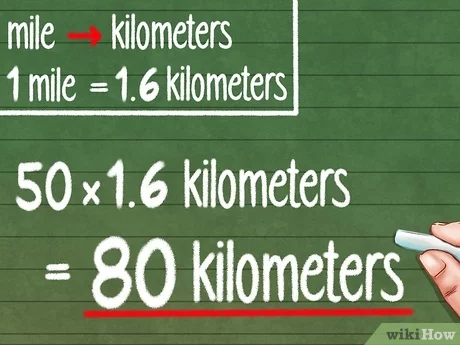
1 mile ≈ 1.6 kilometers
That’s close enough for most real-world uses.
Quick Approximation Formula
Kilometers ≈ Miles × 1.6
Let’s test it:
-
10 miles × 1.6 = 16 km
-
20 miles × 1.6 = 32 km
-
50 miles × 1.6 = 80 km
Compare that to the exact values, and you’ll see it’s very close.
For daily activities like driving distance, walking routes, cycling mileage, or treadmill workouts, this approximation works perfectly. This is one of the easiest ways to convert miles to KM quickly and accurately without a calculator.
A Handy Table for Common Distances
Here’s a quick reference table to make your life easier:
| Miles | Kilometers (Exact) | Kilometers (Approx 1.6) |
|---|---|---|
| 1 | 1.609 km | 1.6 km |
| 2 | 3.218 km | 3.2 km |
| 3 | 4.828 km | 4.8 km |
| 5 | 8.047 km | 8 km |
| 10 | 16.093 km | 16 km |
| 15 | 24.140 km | 24 km |
| 26.2 | 42.195 km | 41.9 km |
| 50 | 80.467 km | 80 km |
| 100 | 160.934 km | 160 km |
If you frequently deal with travel distance, running routes, cycling training, or road trip planning, memorize a few of these anchor points.
How to Convert Miles to KM Quickly and Accurately Without a Calculator
Sometimes you don’t have a calculator. No phone. No smart assistant. Just your brain.
Here’s a simple mental math trick:
The 5-Step Mental Method
-
Take the number of miles.
-
Multiply by 1.5.
-
Add 10% of the original number.
-
That’s your approximate kilometer value.
Example: 20 miles
-
20 × 1.5 = 30
-
10% of 20 = 2
-
30 + 2 = 32 km
That’s almost exactly correct.
Let’s try another:
35 miles
-
35 × 1.5 = 52.5
-
10% of 35 = 3.5
-
52.5 + 3.5 = 56 km
Actual answer: 56.327 km. Very close.
This is one of the smartest ways to convert miles to KM quickly and accurately in real time.
Converting Kilometers Back to Miles
Understanding how to convert miles to KM quickly and accurately is great, but what if you need to go the other way?
To convert kilometers to miles:
Miles = Kilometers ÷ 1.60934
For quick mental math:
Miles ≈ Kilometers × 0.62
Because:
1 ÷ 1.60934 ≈ 0.621
Example:
-
100 km × 0.62 ≈ 62 miles
-
50 km × 0.62 ≈ 31 miles
This reverse conversion is useful for:
-
Reading international speed limits
-
Comparing car fuel economy
-
Converting race distances
-
Understanding global weather reports
Real-Life Examples of Miles to KM Conversion
Road Trips
Let’s say you’re driving 120 miles.
120 × 1.6 = 192 km
If you’re visiting Europe and your rental car shows distance in kilometers, knowing how to convert miles to KM quickly and accurately keeps you from second-guessing your route.
Running and Fitness
A 5K race equals 3.1 miles.
So if you run 5 miles:
5 × 1.60934 = 8.047 km
Fitness trackers, smartwatches, and treadmill displays often allow switching between units. Still, understanding the conversion helps you interpret pace, speed, and training progress.
Aviation and Navigation
In aviation and maritime navigation, distances may appear in nautical miles. However, standard miles and kilometers still show up in travel itineraries, airport distances, and fuel calculations.
Understanding how to convert miles to KM quickly and accurately ensures better situational awareness.
Why 1.60934? A Quick History Lesson
You might wonder where that strange number comes from.
Miles are part of the imperial system, which dates back to Roman times. The metric system, on the other hand, was developed in France in the late 18th century and is based on powers of ten.
The mile is defined as exactly 1,609.344 meters. Since one kilometer equals 1,000 meters, the math gives us 1.609344 kilometers per mile.
Over time, it’s been rounded to 1.60934 for simplicity.
Understanding the origin makes it easier to remember the logic behind how to convert miles to KM quickly and accurately.
Common Mistakes to Avoid
When learning how to convert miles to KM quickly and accurately, people often make a few predictable mistakes:
-
Forgetting to multiply (dividing instead)
-
Using 1.5 instead of 1.6 without adjustment
-
Rounding too early in calculations
-
Confusing kilometers with meters
-
Mixing up miles with nautical miles
Here’s a simple rule:
If you’re converting miles to kilometers, the number should get bigger.
If it gets smaller, you probably made an error.
That quick logic check saves a lot of frustration.
Using Technology for Fast Conversion
Of course, there are digital tools available:
-
Smartphone calculator apps
-
Online conversion calculators
-
GPS navigation systems
-
Car dashboards
-
Fitness apps
-
Smartwatches
However, relying entirely on technology isn’t ideal. Batteries die. Internet connections drop. Devices fail.
Knowing how to convert miles to KM quickly and accurately in your head gives you independence.
Miles to KM in Speed Conversion
Distance isn’t the only application.
Speed matters too.
If your car is traveling 60 miles per hour (mph):
60 × 1.60934 ≈ 96.56 km/h
Quick estimate:
60 × 1.6 = 96 km/h
So 60 mph is roughly 100 km/h (close enough for quick thinking).
This is especially useful when driving abroad, reading car specifications, or comparing vehicle performance.
Practical Memory Hacks
If you want to permanently remember how to convert miles to KM quickly and accurately, try these memory tricks:
-
Think “1 mile is about 1.6 km”
-
Remember “10 miles is about 16 km”
-
Memorize that a marathon (26.2 miles) equals 42.2 km
-
Keep the 0.62 rule for reverse conversion in mind
Repetition builds confidence.
The more you use these conversions in daily life, the faster and more automatic they become.
Academic and Professional Use Cases
Beyond everyday travel and fitness, unit conversion plays a role in:
-
Physics calculations
-
Engineering design
-
Construction planning
-
Scientific research
-
Geographic mapping
-
Logistics and shipping
-
Transportation management
-
Environmental studies
-
Data analysis
In these fields, precision matters. That’s when you use the full 1.60934 factor rather than rounding.
Still, the core principle remains the same. Mastering how to convert miles to KM quickly and accurately builds a strong foundation in measurement systems.
Why the Metric System Dominates Globally
Most of the world uses the metric system because it’s simple and based on powers of ten. Converting meters to kilometers or grams to kilograms is straightforward.
The imperial system, which includes miles, feet, and inches, is less intuitive.
That’s why understanding both systems gives you a global advantage.
It also improves your mathematical literacy and helps when comparing international statistics, sports records, or global transportation data.
Final Thoughts: Master the Skill Once, Use It for Life
At first glance, learning how to convert miles to KM quickly and accurately might seem trivial. However, it’s one of those small skills that keeps showing up throughout your life.
You use it when:
-
Traveling abroad
-
Running a race
-
Buying a car
-
Comparing fuel efficiency
-
Studying geography
-
Watching international sports
-
Planning cycling routes
-
Reading global news
The formula is simple:
Miles × 1.60934 = Kilometers
Or for fast math: Miles × 1.6
Once you internalize that relationship, you’ll never hesitate again when you see a distance measured in miles or kilometers.
Now it’s your turn. Try converting a few distances in your head. Test yourself with 7 miles, 18 miles, or 42 miles. Practice the quick 1.6 multiplier. Use the mental trick. Make it second nature.
If this guide on how to convert miles to KM quickly and accurately helped you, share it with a friend who still reaches for their calculator. And if you have your own shortcut or mental math trick, join the conversation and pass it along. Knowledge grows when we use it.
About the Author