Structure of Atom Class 11 Notes: Complete Guide
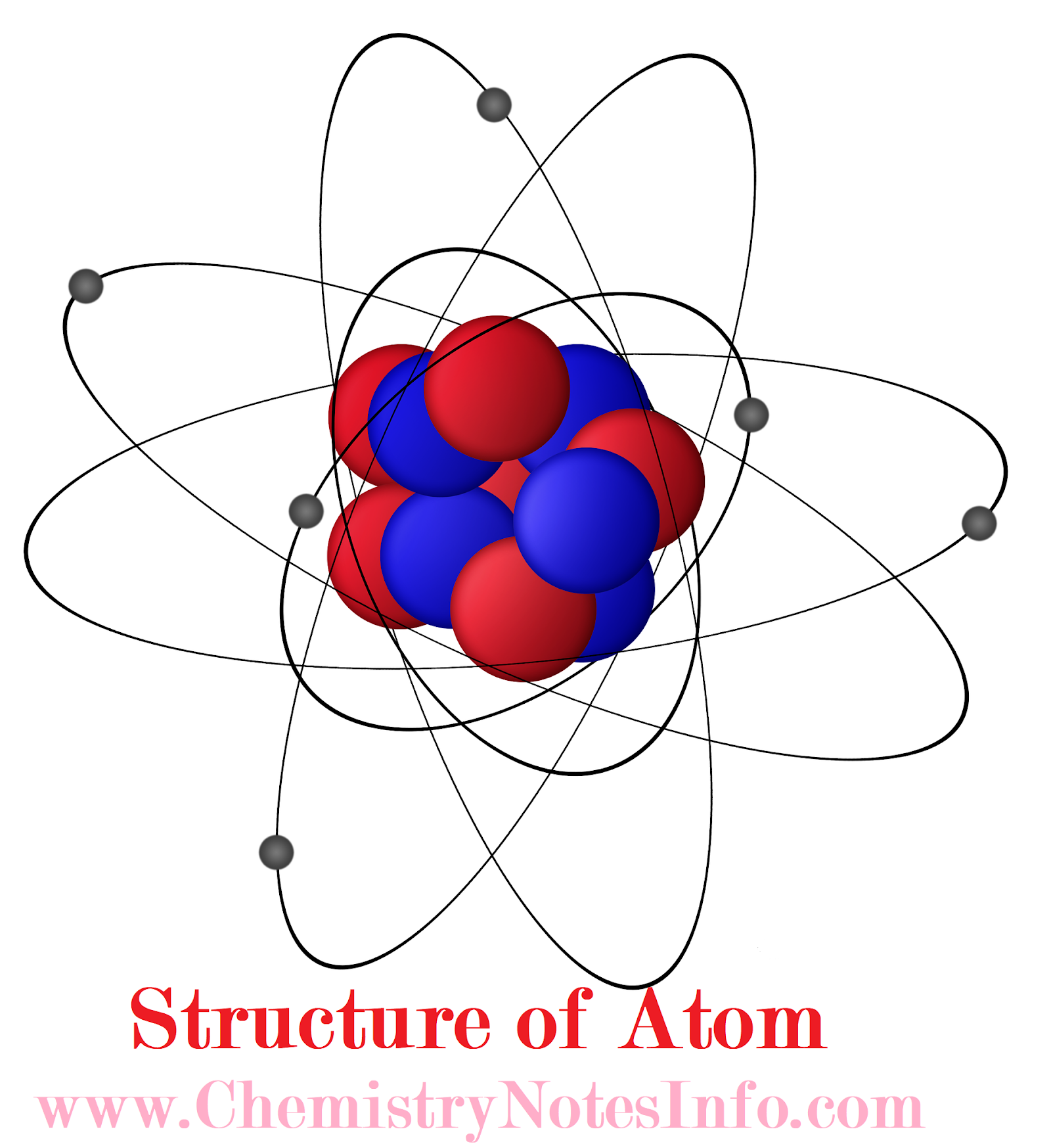
If you ask most Class 11 students which chapter feels both fascinating and confusing at the same time, many will say one thing — Structure of Atom. It is the point where chemistry stops being just reactions and equations and starts exploring the invisible world inside matter.
Understanding the structure of atom class 11 notes properly is not just important for exams. It lays the foundation for physical chemistry, chemical bonding, periodic classification, and even advanced topics in Class 12. If you get this chapter right, half your chemistry fear disappears.
In this complete guide, I’ll walk you through the entire chapter in a clear, conversational way — as if you’re sitting with your notebook open and we’re revising together.
Let’s begin from the very basics.
What Is an Atom?
An atom is the smallest unit of matter that retains the chemical properties of an element. Everything around you — air, water, your desk, your phone — is made up of atoms.
However, atoms are not solid balls. They have internal structure. This internal structure is exactly what we study in Structure of Atom Class 11 Notes.
Atoms consist of three fundamental particles:
-
Electrons
-
Protons
-
Neutrons
Each of these subatomic particles has its own mass, charge, and position.
Subatomic Particles Overview
| Particle | Charge | Relative Mass | Location |
|---|---|---|---|
| Electron | -1 | 1/1836 | Outside nucleus |
| Proton | +1 | 1 | Inside nucleus |
| Neutron | 0 | 1 | Inside nucleus |
The atomic number represents the number of protons in the nucleus. The mass number is the total of protons and neutrons.
This simple idea forms the backbone of structure of atom class 11 notes.
Discovery of Subatomic Particles
Chemistry did not discover atomic structure overnight. It evolved through several experiments.
Discovery of Electron – J.J. Thomson
Using cathode ray discharge tube experiments, J.J. Thomson discovered electrons. He proved that atoms contain negatively charged particles.
He proposed the Plum Pudding Model, where electrons were embedded in a positively charged sphere.
Although this atomic model was later rejected, it was a crucial step in understanding atomic theory.
Discovery of Proton – Goldstein
Goldstein observed canal rays and identified positively charged particles, which we now call protons.
Discovery of Neutron – James Chadwick
Chadwick discovered the neutron in 1932. This explained why atomic mass was greater than the number of protons alone.
Understanding these discoveries is essential when preparing structure of atom class 11 notes for exams.
Atomic Models: Evolution of Atomic Structure
The development of atomic models helps us understand how our concept of the atom improved over time.
Thomson’s Atomic Model
-
Atom is a positively charged sphere
-
Electrons embedded like raisins in a pudding
-
Could not explain scattering experiment results
Rutherford’s Atomic Model
Rutherford performed the famous gold foil experiment.
Observations:
-
Most alpha particles passed straight through
-
Some were deflected
-
Very few bounced back
Conclusions:
-
Atom is mostly empty space
-
Positive charge is concentrated in a small region called nucleus
-
Electrons revolve around nucleus
However, Rutherford’s model failed to explain atomic stability.
Bohr’s Atomic Model
Bohr improved Rutherford’s model by introducing quantized energy levels.
Postulates of Bohr’s model:
-
Electrons revolve in fixed circular orbits called shells
-
Each orbit has fixed energy
-
Energy is emitted or absorbed when electrons jump between levels
The formula for energy of an electron in hydrogen-like species:
E = -2.18 × 10⁻¹⁸ (Z²/n²) joules
This part is extremely important in structure of atom class 11 notes, especially for numerical problems.
Dual Nature of Matter and Radiation
Here comes one of the most interesting parts of the chapter.
Light behaves as both particle and wave. This concept is called wave-particle duality.
Planck’s Quantum Theory
Energy is emitted or absorbed in discrete packets called quanta.
E = hν
Where:
-
h = Planck’s constant
-
ν = frequency
Photoelectric Effect
When light falls on metal surface, electrons are ejected.
Key terms:
-
Threshold frequency
-
Work function
-
Kinetic energy
-
Intensity of radiation
Einstein explained this using quantum theory.
This topic is crucial in structure of atom class 11 notes because it links physics concepts with chemistry.
Atomic Spectra
When atoms absorb energy, electrons jump to higher energy levels. When they return, they emit radiation.
This produces atomic spectra.
Types of spectra:
-
Emission spectrum
-
Absorption spectrum
-
Line spectrum
-
Continuous spectrum
Hydrogen spectrum follows Balmer series, Lyman series, Paschen series.
The Rydberg formula:
1/λ = R (Z²) (1/n₁² − 1/n₂²)
Students often find this confusing, but with practice, it becomes easy.
Quantum Mechanical Model of Atom
Bohr’s model worked only for hydrogen atom. To explain multi-electron atoms, quantum mechanics was developed.
Important principles included in structure of atom class 11 notes:
Heisenberg’s Uncertainty Principle
It is impossible to determine both position and momentum of electron simultaneously.
de Broglie Equation
λ = h/mv
This equation proves matter has wave nature.
Schrödinger Wave Equation
Describes probability of finding electron in space.
Instead of fixed orbits, we now have atomic orbitals.
Atomic Orbitals and Quantum Numbers
Electrons do not move in circular paths. They exist in orbitals — regions of high probability.
Four Quantum Numbers
-
Principal quantum number (n)
-
Azimuthal quantum number (l)
-
Magnetic quantum number (m)
-
Spin quantum number (s)
These determine:
-
Shell
-
Subshell
-
Orientation
-
Electron spin
Subshell types:
-
s orbital
-
p orbital
-
d orbital
-
f orbital
Shapes of orbitals:
-
s is spherical
-
p is dumbbell-shaped
-
d is complex
-
f is more complex
This part of structure of atom class 11 notes is heavily tested in board and competitive exams.
Electronic Configuration
Electronic configuration tells us how electrons are arranged in an atom.
Important Rules
-
Aufbau Principle
-
Pauli Exclusion Principle
-
Hund’s Rule
Aufbau order:
1s < 2s < 2p < 3s < 3p < 4s < 3d < 4p < 5s …
Example:
Oxygen (Z = 8)
1s² 2s² 2p⁴
Common terms:
-
Valence shell
-
Valence electrons
-
Core electrons
-
Orbital filling
-
Degenerate orbitals
Learning electronic configuration properly strengthens your understanding of periodic trends and chemical bonding.
Important Formulas for Quick Revision
Here’s a compact revision list from structure of atom class 11 notes:
-
E = hν
-
c = λν
-
λ = h/mv
-
1/λ = R (1/n₁² − 1/n₂²)
-
Eₙ = -2.18 × 10⁻¹⁸ (Z²/n²)
Keep these formulas memorized for numerical problems.
Isotopes, Isobars and Isotones
These are common exam questions.
-
Isotopes: Same atomic number, different mass number
-
Isobars: Same mass number, different atomic number
-
Isotones: Same number of neutrons
Examples:
-
Carbon-12 and Carbon-14 (isotopes)
-
Argon-40 and Calcium-40 (isobars)
Understanding these concepts is essential for mastering structure of atom class 11 notes.
Hydrogen Spectrum Series
Hydrogen atom gives distinct spectral lines.
Main series:
-
Lyman series (UV region)
-
Balmer series (visible region)
-
Paschen series (infrared region)
-
Brackett series
-
Pfund series
These series are derived from electron transitions between energy levels.
Common Mistakes Students Make
While revising structure of atom class 11 notes, students often:
-
Confuse orbit and orbital
-
Forget units in numerical problems
-
Mix up quantum numbers
-
Ignore derivations
-
Skip practice questions
The key is consistent practice and conceptual clarity.
Exam-Oriented Preparation Tips
If you want high marks:
-
Revise atomic models thoroughly
-
Practice derivations of energy equations
-
Solve photoelectric effect numericals
-
Learn quantum number rules clearly
-
Draw orbital diagrams neatly
For competitive exams like NEET and JEE, focus more on:
-
Wave mechanics
-
De Broglie relation
-
Heisenberg principle
-
Electronic configuration exceptions
These are frequently asked.
Why Structure of Atom Class 11 Notes Is So Important
This chapter connects to:
-
Chemical bonding
-
Periodic table trends
-
Ionization enthalpy
-
Electron affinity
-
Oxidation states
-
Valency
-
Hybridization
-
Molecular orbital theory
Without mastering structure of atom class 11 notes, future chemistry chapters become difficult.
It is truly the backbone of physical chemistry.
Quick Summary Table
| Topic | Key Concept |
|---|---|
| Subatomic particles | Proton, neutron, electron |
| Atomic number | Number of protons |
| Mass number | Protons + neutrons |
| Bohr model | Fixed energy levels |
| Quantum mechanics | Probability-based model |
| Orbitals | s, p, d, f shapes |
| Electronic configuration | Aufbau principle |
| Spectra | Emission & absorption lines |
Keep this summary handy before exams.
Final Thoughts: Master the Invisible World
The beauty of chemistry lies in understanding things we cannot see. The structure of atom class 11 notes may feel heavy at first, filled with equations, models, and quantum theory. However, once you connect the concepts step by step, everything starts making sense.
Think about it — every reaction, every compound, every color, every bond exists because of the arrangement of electrons inside atoms.
That is powerful.
So don’t just memorize the chapter. Visualize it. Practice numericals. Understand the logic behind atomic models. Revise quantum numbers until they become second nature.
If you found this guide helpful, revise it again before your exams and share it with your classmates. And if you still have doubts about any topic in structure of atom class 11 notes, take time to clarify them now — because this foundation will support your entire chemistry journey ahead.
About the Author