xr:d:DAFdRsHVsGM:5,j:873484075,t:23031514
Understanding mathematical symbols can sometimes feel like learning a new language. Among these symbols, the less than sign (<) is simple at first glance but often misunderstood or misused, especially outside formal math classes. Whether you’re a student, programmer, or someone just trying to make sense of spreadsheets, mastering how to use the less than sign correctly is crucial.
In this article, we’ll break down everything you need to know about this humble symbol — from its meaning and proper usage to common mistakes and practical examples. By the end, you’ll feel confident using it in any context, whether in arithmetic, programming, or real-life comparisons.
What is the Less Than Sign?
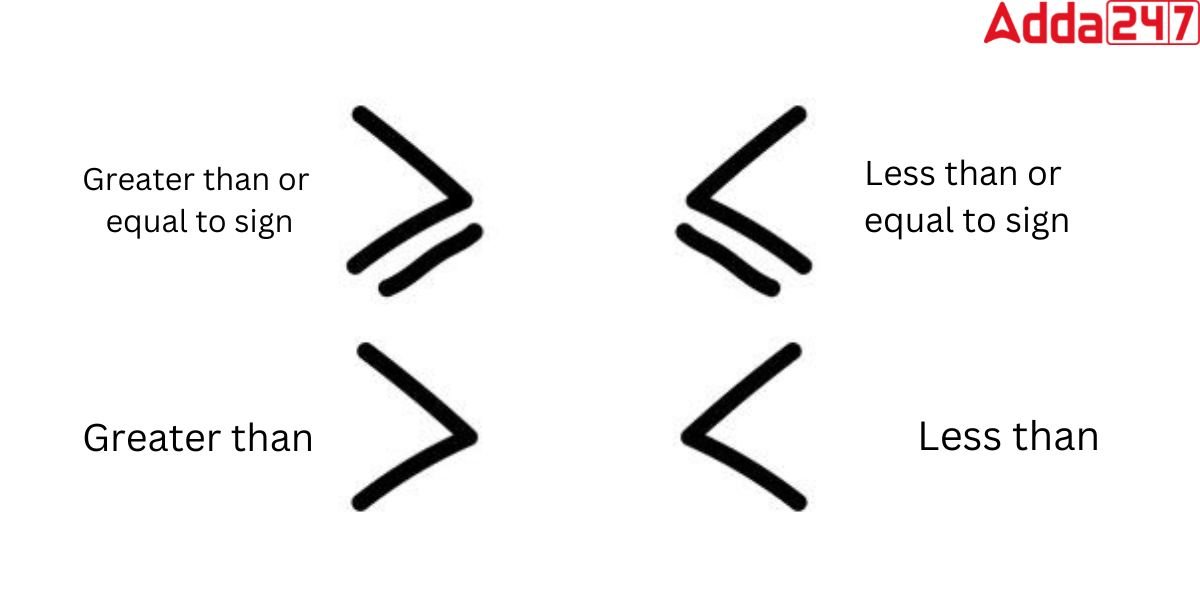
The less than sign (<) is a mathematical symbol used to compare two values. When you place it between two numbers, it indicates that the value on the left is smaller than the value on the right.
For example:
This reads as “3 is less than 7,” and it’s one of the simplest ways to express inequality.
Historical Background
The concept of inequalities dates back to ancient civilizations. While the modern “<” symbol was standardized in the 17th century by the mathematician Thomas Harriot, the idea of comparing values existed in early Greek and Indian mathematics. Harriot wanted a way to simplify mathematical writing, and the less than sign has been in everyday use ever since.
Why Using the Less Than Sign Correctly Matters
Many people underestimate the importance of using the less than sign correctly, but errors can have consequences in multiple areas:
-
Education – Incorrect usage can lead to wrong answers in tests or assignments.
-
Programming – A misplaced
<can cause bugs or logic errors in code. -
Finance – Using the wrong inequality when comparing budgets or prices can result in flawed calculations.
-
Data Analysis – Spreadsheet formulas and database queries rely heavily on correct inequality usage.
Getting it right isn’t just about avoiding mistakes; it’s about communicating ideas clearly.
How to Use the Less Than Sign in Mathematics
Using the less than sign in math is straightforward but requires attention to context. Here’s a step-by-step guide:
Basic Number Comparison
-
Place the smaller number on the left and the larger number on the right.
-
Example:
-
Reverse the numbers, and the statement becomes false:
Fractions and Decimals
The less than sign works perfectly with fractions and decimals:
Remember, the symbol is always read from left to right, indicating the smaller value first.
Negative Numbers
Inequalities can seem tricky with negative numbers, but the rule still applies:
A negative number closer to zero is always greater than a number further from zero.
Using the Less Than Sign in Programming
Programmers encounter the less than sign in almost every language. It’s used for comparisons, conditions, and loops.
Conditional Statements
In languages like Python, JavaScript, and Java, the less than sign is often used in if statements:
This checks if the variable age is smaller than 18, and executes the block if true.
Loops
It’s also crucial for loops:
This prints numbers 0 to 4. Misplacing the < can cause infinite loops or skipped iterations.
Common Mistakes in Programming
-
Using
<instead of<=when you want to include the boundary number. -
Forgetting to compare the correct variables.
-
Confusing
<with>(greater than sign).
Understanding the context of your code is essential to using the less than sign correctly.
Less Than vs. Other Symbols
It’s easy to mix up < with other similar symbols:
| Symbol | Name | Meaning | Example |
|---|---|---|---|
< |
Less than | Left value smaller than right | 3 < 5 |
> |
Greater than | Left value larger than right | 7 > 2 |
<= |
Less than or equal to | Left value smaller or equal to right | 5 <= 5 |
>= |
Greater than or equal to | Left value larger or equal to right | 10 >= 9 |
≠ |
Not equal | Values are not equal | 3 ≠ 4 |
Knowing the differences ensures clarity in math and programming.
Real-Life Examples of Using the Less Than Sign
Using the less than sign is not limited to textbooks or code. It appears in everyday life too:
-
Shopping: “Items under $50 (<$50) qualify for free shipping.”
-
Health: “Recommended daily sugar intake < 25 grams.”
-
Travel: “Children under 12 (<12) ride free.”
-
Fitness: “Target heart rate should be < 180 bpm during light exercise.”
These examples show that understanding the symbol helps you interpret instructions and data accurately.
Tips for Mastering the Less Than Sign
-
Read Left to Right: Always remember the smaller value comes first.
-
Practice with Numbers: Use integers, fractions, and decimals to strengthen understanding.
-
Check with Reverse Comparison: Flip the numbers to see if the statement holds.
-
Use Visual Aids: Drawing a number line helps visualize inequalities.
-
Learn Contextual Use: Recognize that programming, math, and real-life applications may have slightly different conventions.
Common Misconceptions About the Less Than Sign
Even experienced users sometimes make mistakes with <:
-
Misreading Negative Numbers: Some think -5 < -2 is false because 5 is smaller than 2, forgetting negative direction.
-
Swapping Symbols: Confusing
<with>can completely change the meaning. -
Overlooking Boundaries: Forgetting to use
<=when including the boundary number leads to errors. -
Assuming Equality:
<never includes equality; that’s the job of<=.
Being mindful of these misconceptions ensures correct usage in all scenarios.
Fun Facts About the Less Than Sign
-
The less than sign is called an inequality symbol along with its counterpart, the greater than sign.
-
It is commonly used in programming, spreadsheets, and even logic puzzles.
-
Some cultures historically used different symbols for inequality, but
<and>became universal due to simplicity.
Quick Reference: Using the Less Than Sign Correctly
| Scenario | Correct Usage | Example |
|---|---|---|
| Simple numbers | Smaller value first | 4 < 9 |
| Negative numbers | Consider distance from zero | -3 < 2 |
| Fractions | Compare decimal values if needed | 1/3 < 1/2 |
| Decimals | Use the same number of decimal places for clarity | 0.45 < 0.5 |
| Programming | Use in conditionals | if x < y: |
| Loops | Control iterations | for i in range(0, 10) if i < 5: |
Conclusion
Mastering how to use the less than sign correctly is more than a math skill; it’s a practical tool that applies to programming, finance, data analysis, and daily life. From simple comparisons like 3 < 7 to complex programming logic, this symbol helps us make sense of inequalities and communicate clearly.
Remember to always place the smaller value first, understand context, and double-check your work in both math and code. By practicing with real-world examples and visual aids like number lines, you can gain confidence and precision.
About the Author