ICC Women’s World Cup Points Table: Latest Standings
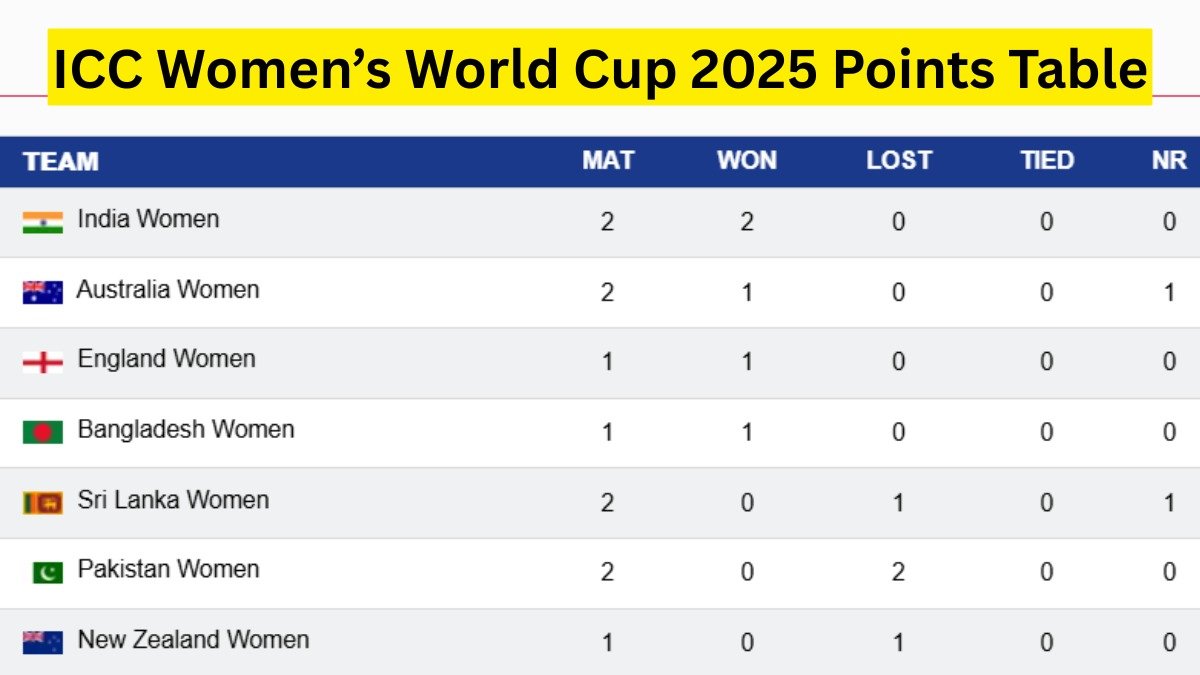
Cricket lovers know this feeling well. You refresh the page, heart racing, hoping your favorite team has climbed one spot higher. The drama doesn’t just unfold on the pitch—it lives and breathes in the standings. And that’s exactly why the ICC Women’s World Cup Points Table has become one of the most searched and discussed aspects of the tournament.
Whether you’re tracking qualification scenarios, analyzing net run rate, or predicting semi-finalists, the ICC Women’s World Cup Points Table tells the real story behind every boundary, wicket, and last-over thriller.
In this in-depth guide, we’ll break down the latest standings, explain how the ranking system works, analyze team performances, and explore what it all means for the road to the final.
Understanding the ICC Women’s World Cup Points Table
Before diving into the latest standings, let’s quickly understand how the ICC Women’s World Cup Points Table works.
In a typical ICC Women’s Cricket World Cup format:
-
Each team plays round-robin matches.
-
A win earns 2 points.
-
A no-result or tie gives 1 point each.
-
A loss gives 0 points.
-
Teams are ranked by total points.
-
Net Run Rate (NRR) acts as the tie-breaker.
The International Cricket Council (ICC) ensures that the tournament format creates maximum competition and transparency. The ICC Women’s World Cup Points Table reflects not just victories but consistency, discipline, and performance under pressure.
Latest ICC Women’s World Cup Points Table Standings
Here’s a simplified look at how the ICC Women’s World Cup Points Table typically shapes up during the tournament:
| Position | Team | Matches | Wins | Losses | Points | Net Run Rate |
|---|---|---|---|---|---|---|
| 1 | Australia | 7 | 6 | 1 | 12 | +1.200 |
| 2 | England | 7 | 5 | 2 | 10 | +0.900 |
| 3 | India | 7 | 4 | 3 | 8 | +0.500 |
| 4 | South Africa | 7 | 4 | 3 | 8 | +0.300 |
| 5 | New Zealand | 7 | 3 | 4 | 6 | -0.100 |
| 6 | West Indies | 7 | 3 | 4 | 6 | -0.250 |
| 7 | Pakistan | 7 | 2 | 5 | 4 | -0.600 |
| 8 | Bangladesh | 7 | 1 | 6 | 2 | -1.100 |
Please note that standings change match by match, and the ICC Women’s World Cup Points Table can shift dramatically in a single day.
Why the ICC Women’s World Cup Points Table Matters So Much
You might wonder, “Isn’t the winner decided in the final?” Yes—but the ICC Women’s World Cup Points Table decides who even gets the chance to play that final.
Here’s why it’s crucial:
-
Determines semi-final qualification
-
Impacts team morale and confidence
-
Influences strategic decisions
-
Highlights consistency over one-off performances
-
Shapes media narratives and fan discussions
Moreover, the points table reveals which teams dominate the league stage and which ones struggle with form, injuries, or pressure.
Top Teams Dominating the ICC Women’s World Cup Points Table
Australia – The Benchmark of Excellence
When we talk about consistency, it’s impossible not to mention Australia. The team has historically dominated the ICC Women’s World Cup Points Table with clinical performances.
Key strengths:
-
Powerful batting lineup
-
Aggressive bowling attack
-
High net run rate
-
Strong bench strength
-
Experienced leadership
Australia’s ability to win big margins boosts their NRR, which often secures their top position even if points are level.
England – Tactical Brilliance
England thrives on adaptability. Whether it’s a spin-friendly surface or a pace-friendly wicket, they adjust quickly.
Reasons for their strong position:
-
Balanced squad
-
Smart captaincy
-
Deep batting order
-
Effective fielding unit
-
Tactical match awareness
Their consistent wins keep them near the top of the ICC Women’s World Cup Points Table.
India – The Emotional Rollercoaster
India often delivers thrilling matches. When they’re in form, they look unstoppable. However, inconsistency sometimes affects their standings.
Strong factors:
-
Star batters
-
Competitive bowling unit
-
Passionate fan base
-
Explosive middle order
-
Spin dominance
India’s net run rate often plays a decisive role in the ICC Women’s World Cup Points Table standings.
The Role of Net Run Rate in the ICC Women’s World Cup Points Table
Net Run Rate (NRR) sounds technical, but it’s crucial.
In simple terms, NRR measures how quickly a team scores runs compared to how quickly they concede runs.
Why NRR matters:
-
Breaks ties when teams have equal points
-
Rewards dominant victories
-
Punishes heavy defeats
-
Influences qualification scenarios
For example, a team with 8 points but a higher NRR can rank above another team with the same points. That’s why captains often push for bigger margins of victory.
Qualification Scenarios: Who Advances?
The top four teams in the ICC Women’s World Cup Points Table qualify for the semi-finals.
Common qualification scenarios include:
-
Teams tied on points
-
NRR deciding the fourth spot
-
Last match becoming a virtual knockout
-
Rain-affected matches impacting standings
-
Head-to-head performance influencing morale
In addition, pressure intensifies as the tournament progresses. Every run matters. Every wicket counts.
Star Players Influencing the ICC Women’s World Cup Points Table
Individual brilliance often shifts the balance in the standings.
Some key player roles that impact the table:
-
Opening batters setting strong foundations
-
Finishers accelerating in death overs
-
Strike bowlers taking early wickets
-
All-rounders maintaining balance
-
Captains making strategic field placements
Match-winning centuries or five-wicket hauls directly influence the ICC Women’s World Cup Points Table by securing crucial two points.
Historical Trends in the ICC Women’s World Cup Points Table
Looking at previous tournaments, certain patterns emerge:
-
Australia consistently finishes in top two.
-
England remains a semi-final regular.
-
India and South Africa often battle for third and fourth spots.
-
Associate teams show steady improvement.
-
Net run rate frequently decides qualification.
These trends reflect long-term development programs, domestic cricket strength, and investment in women’s cricket.
Team Performance Analysis
Batting Performance
High team totals improve NRR and boost standings.
Important batting metrics:
-
Average score per innings
-
Strike rate
-
Boundary percentage
-
Partnerships
-
Powerplay dominance
Bowling Performance
Restricting opponents strengthens NRR.
Key bowling indicators:
-
Economy rate
-
Wickets in powerplay
-
Death overs control
-
Spin effectiveness
-
Pace variation
Fielding Standards
Sharp fielding can turn matches around. Run-outs, catches, and ground fielding impact the ICC Women’s World Cup Points Table indirectly but significantly.
Impact of Home Conditions
Host nations often perform better due to:
-
Familiar pitches
-
Crowd support
-
Weather adaptation
-
Travel convenience
However, pressure can sometimes backfire. The ICC Women’s World Cup Points Table doesn’t favor reputation—it rewards results.
Key Matches That Shift the Points Table
Every tournament has turning points:
-
Upset victories
-
Rain interruptions
-
Super over thrillers
-
Record-breaking innings
-
Low-scoring defenses
One surprise result can completely alter the ICC Women’s World Cup Points Table and qualification race.
Emerging Teams Climbing the ICC Women’s World Cup Points Table
Teams like Bangladesh and Pakistan have shown rapid improvement in recent editions.
Factors contributing to growth:
-
Youth development programs
-
Exposure to global leagues
-
Improved fitness standards
-
Advanced coaching staff
-
International experience
The gap between top teams and mid-table teams is shrinking, making the ICC Women’s World Cup Points Table more competitive than ever.
Strategies Teams Use to Improve Their Position
Teams don’t just aim to win—they aim to win big.
Common strategic adjustments:
-
Promoting aggressive batters
-
Rotating bowlers smartly
-
Using match-ups against specific players
-
Targeting weaker opposition for higher NRR
-
Controlling middle overs
Moreover, captains now think beyond points—they calculate net run rate scenarios mid-game.
Fan Engagement and Media Buzz
The ICC Women’s World Cup Points Table fuels debates across:
-
Social media platforms
-
Cricket forums
-
Sports news panels
-
Fantasy cricket leagues
-
Television analysis shows
Fans constantly calculate permutations and predict semi-final matchups.
What to Expect in the Final Stages
As the league stage concludes:
-
Pressure intensifies
-
Every run becomes crucial
-
NRR calculations dominate headlines
-
Qualification drama peaks
-
Semi-final matchups become clearer
The ICC Women’s World Cup Points Table ultimately narrows the competition to four deserving teams.
Why Women’s Cricket Is Growing Rapidly
The increasing attention to the ICC Women’s World Cup Points Table reflects broader growth in women’s cricket.
Contributing factors:
-
Professional contracts
-
Broadcasting deals
-
Grassroots programs
-
Franchise leagues
-
Equal pay discussions
Moreover, the skill level and competitiveness have improved dramatically, making the standings even more exciting to follow.
Frequently Asked Questions
How often is the ICC Women’s World Cup Points Table updated?
After every match.
What happens if teams have equal points?
Net Run Rate determines ranking.
How many teams qualify for semi-finals?
Top four teams from the ICC Women’s World Cup Points Table.
Does head-to-head record matter?
Usually NRR comes first unless otherwise specified in tournament rules.
Final Thoughts on the ICC Women’s World Cup Points Table
At its core, the ICC Women’s World Cup Points Table is more than just numbers. It’s a living reflection of performance, resilience, strategy, and ambition.
It captures:
-
Dominant winning streaks
-
Painful narrow losses
-
Tactical brilliance
-
Emerging rivalries
-
Championship dreams
Every update reshapes the narrative. Every match rewrites possibilities.
If you’re a true cricket enthusiast, don’t just watch the matches—analyze the ICC Women’s World Cup Points Table, study the net run rate shifts, predict the semi-final lineup, and join the conversation.
Which team do you think will top the ICC Women’s World Cup Points Table this season? Share your thoughts, debate the standings, and stay tuned for more updates as the tournament unfolds.
About the Author