Have you ever paused mid-sentence and wondered, “Wait… is it mice or mouses?” You’re not alone. The English language has a way of surprising even confident speakers. The mouse plural form explained question pops up more often than you’d think—especially when switching between talking about tiny rodents and computer devices.
English grammar is full of irregular plural nouns that don’t follow simple rules. And “mouse” is one of those words that sparks confusion. In everyday conversation, in academic writing, and even in tech discussions, knowing the correct plural form matters. It shows attention to detail and strengthens your language skills.
In this guide, we’ll break down the mouse plural form explained clearly and simply. We’ll look at grammar rules, historical origins, real-life examples, differences between British and American usage, and even when “mouses” is actually correct. By the end, you’ll never hesitate again.
Let’s settle this once and for all.
Understanding the Basics of Plural Nouns
Before diving deep into the mouse plural form explained, it helps to review how plural nouns typically work in English.
Regular Plural Nouns
Most English nouns form plurals by simply adding:
-
-s (cat → cats)
-
-es (box → boxes)
These follow predictable grammar rules. They’re straightforward and easy to remember.
Irregular Plural Nouns
However, English also includes irregular plural forms. These words don’t follow standard patterns. For example:
-
Child → Children
-
Man → Men
-
Foot → Feet
-
Goose → Geese
And yes—
-
Mouse → Mice
The word “mouse” belongs to this special category of irregular nouns.
Mouse Plural Form Explained: The Correct Answer
Let’s address the big question directly.
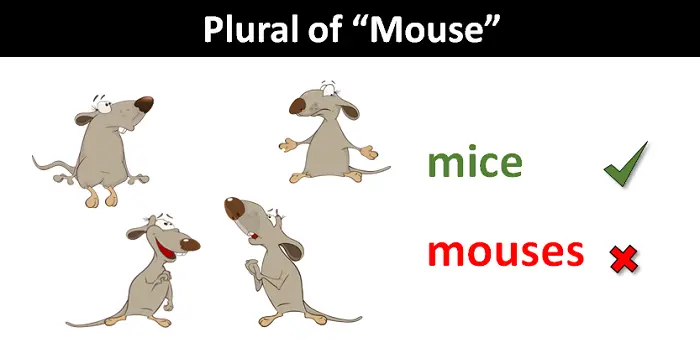
The correct plural of “mouse” (the animal) is mice.
Not “mouses.” Not “mousees.” Just mice.
So if you see two small rodents in your kitchen, you say:
-
“There are two mice in the pantry.”
This is the standard plural noun form recognized in English dictionaries, grammar guides, and academic writing.
Why Is It “Mice” and Not “Mouses”?
The answer lies in linguistic history.
The word “mouse” comes from Old English mūs. Its plural was mȳs. Over time, pronunciation changed, but the irregular pattern stayed. That’s why we say:
-
Mouse → Mice
-
Louse → Lice
This vowel change is called umlaut pluralization, a Germanic language feature. While modern English doesn’t use this pattern often, a few words still preserve it.
So when discussing the mouse plural form explained, history plays a key role.
When Is “Mouses” Actually Correct?
Here’s where things get interesting.
While “mice” is correct for animals, “mouses” can be correct in specific contexts.
Computer Devices
In technology discussions, both “mice” and “mouses” are used as plurals for the computer mouse.
For example:
-
“The IT department ordered new computer mice.”
-
“The office replaced all the wireless mouses.”
Although “mice” remains more common and widely accepted, “mouses” appears in technical documentation and informal tech speech.
Verb Form: To Mouse
“Mouses” is also correct as a verb.
Example:
-
“The cat mouses around the garden at night.”
Here, “mouses” is the third-person singular form of the verb “to mouse,” meaning to search quietly or hunt like a cat.
So in the complete mouse plural form explained, context matters. Grammar always depends on usage.
Mouse vs Mice: Key Differences at a Glance
Here’s a simple comparison:
| Singular | Plural | Usage Context |
|---|---|---|
| Mouse | Mice | Animals (rodents) |
| Mouse | Mice | Computer devices (common) |
| Mouse | Mouses | Computer devices (less common) |
| To mouse | Mouses | Verb form |
This table clears up most confusion quickly.
Common Grammar Mistakes People Make
Even fluent English speakers mix this up. Here are common mistakes:
-
Saying “three mouses” when referring to rodents
-
Assuming all nouns add “-s”
-
Confusing verb forms with plural nouns
-
Using incorrect spelling like “meese”
The mouse plural form explained becomes easy once you recognize it as an irregular noun pattern.
Why English Has So Many Irregular Plurals
English is a mix of influences—Germanic roots, Latin borrowings, French vocabulary, and more. Because of this blended history, pluralization rules vary.
Some irregular plural examples include:
-
Tooth → Teeth
-
Woman → Women
-
Ox → Oxen
-
Person → People
-
Cactus → Cacti
-
Analysis → Analyses
Compared to these, “mouse → mice” isn’t so strange after all.
Mouse in Different Contexts
Let’s explore how the word appears in real-life usage.
In Biology
When discussing mammals, rodents, or lab experiments:
-
“The researchers studied white mice.”
-
“Field mice live in rural environments.”
Scientific writing strictly uses “mice.”
In Technology
In tech articles and product reviews:
-
“Gaming mice offer better precision.”
-
“Wireless mice improve productivity.”
Even in the digital age, the irregular plural sticks around.
In Literature and Storytelling
Children’s books often use the word “mice.”
-
“The three blind mice.”
-
“A group of mice gathered quietly.”
These examples reinforce correct grammar naturally.
How to Remember the Correct Plural
Here’s a simple memory trick:
If it rhymes with “ice,” it becomes “mice.”
Think:
-
Mouse → Mice
-
Louse → Lice
This quick association helps avoid errors in writing and speech.
Is “Mouses” Ever Wrong?
When talking about animals, yes—“mouses” is grammatically incorrect.
If someone writes:
-
“There were four mouses in the barn.”
That sentence contains a grammar mistake.
However, language evolves. In casual tech conversations, “mouses” may appear, but it’s still less preferred.
For professional writing, academic papers, blog posts, or SEO content, stick with “mice.”
That’s the safest approach when understanding the mouse plural form explained.
Pluralization Rules Compared
Let’s compare regular and irregular noun patterns:
Regular Nouns
-
Book → Books
-
Car → Cars
-
Chair → Chairs
Irregular Nouns with Vowel Change
-
Mouse → Mice
-
Goose → Geese
-
Man → Men
Irregular Nouns with Unique Forms
-
Child → Children
-
Person → People
-
Foot → Feet
Recognizing these categories strengthens grammar skills overall.
Why This Matters for Writing and SEO
You might wonder: why does this detail matter so much?
In content writing, grammar accuracy impacts:
-
Search engine ranking
-
User trust
-
Readability
-
Authority
-
Professional credibility
If you misuse plural forms like “mouses” instead of “mice,” it can affect how readers perceive your expertise.
That’s why understanding the mouse plural form explained is more than trivia—it’s part of polished communication.
British vs American English Usage
Both American English and British English use “mice” for rodents.
In technology contexts:
-
American English commonly prefers “mice.”
-
British English also accepts “mice,” though “mouses” occasionally appears in informal speech.
Dictionaries such as Oxford and Merriam-Webster list “mice” as the primary plural.
Frequently Asked Questions
Is “mice” always correct?
For animals, yes. For computer devices, “mice” is preferred.
Why isn’t it “mouses”?
Because “mouse” follows an Old English irregular plural pattern.
Can I say “computer mouses”?
You can, but “computer mice” sounds more natural and professional.
What type of noun is “mouse”?
It’s a common noun and an irregular plural noun.
Fun Language Facts About “Mouse”
-
The computer mouse was named because its cord resembled a tail.
-
The word has been used since before the 12th century.
-
“Mice” appears in countless idioms and proverbs.
-
The plural rule survived centuries of language evolution.
Language history truly shapes modern grammar.
Practical Examples in Sentences
Let’s reinforce learning with clear examples.
Correct usage:
-
“The barn was filled with mice.”
-
“The lab tested several mice.”
-
“We bought two new gaming mice.”
-
“The cat hunts mice at night.”
Incorrect usage:
-
“There are five mouses in the attic.”
Seeing it in action helps lock in understanding.
Quick Grammar Checklist
When writing, ask yourself:
-
Am I referring to rodents? → Use “mice.”
-
Am I discussing computer accessories? → Prefer “mice.”
-
Is it a verb? → “Mouses” can be correct.
Simple checks prevent embarrassing grammar mistakes.
The Mouse Plural Form Explained in Simple Terms
If we strip it down to basics:
Mouse is singular.
Mice is plural.
Mouses is rarely used and context-dependent.
That’s it.
But the deeper explanation—history, grammar evolution, irregular noun patterns—gives you confidence, not just memorization.
Understanding the mouse plural form explained means you grasp how English really works.
Final Thoughts: Mice, Not Mouses
Language can be tricky, but it doesn’t have to be intimidating. The confusion around “mice” and “mouses” is completely understandable. After all, English rarely plays by consistent rules.
Still, the answer is clear.
When referring to animals, the correct plural is mice.
In technology, “mice” remains the standard choice.
“Mouses” appears occasionally but is limited and context-specific.
Now that you’ve seen the full mouse plural form explained, you can use the word confidently in any conversation—academic, professional, or casual.
If this guide helped clarify things, share it with someone who loves language trivia or struggles with tricky grammar rules. And if you’ve heard unusual plural forms before, feel free to discuss them. English is always evolving, and that’s part of what makes it fascinating.
About the Author